In the Gers, fresh foie gras is in season from November to March. Perfectly suited to the major Christmas and Easter festivities, foie gras is an essential part of any sumptuous and convivial table. Cooked or preserved, it can be enjoyed all year round with a Gascony wine. Identifiable by the "Esprit Foie Gras" brand, the Gers foie gras that we produce cultivates both the traditions of the terroir and the sensory pleasures of French gastronomy.
A protected French tradition
The worldwide success of foie gras is based on a traditional, family-run production process that is part of France's protected cultural and gastronomic heritage(art. L 654-27-1 of the French Rural Code). As the world's leading producer, consumer and exporter of foie gras, France perpetuates its fabulous gastronomic tradition, originating in the farms of Alsace and the South-West.
Farmers raise their geese and ducks with the utmost care and attention to detail. From the buildings to the grazing areas, the European Union has set strict specifications guaranteeing the hygiene and comfort of poultry at every stage of their growth. Attentive to the health and well-being of their animals, farmers often grow the corn they feed them themselves. The technique of fattening poultry is then a question of family know-how, a transmission of good practices that make foie gras a product of excellence.
A glance at annual foies gras production in France reveals a marked imbalance between duck foies gras, largely in the lead, and goose foies gras, which now account for less than 5% of total production. This disproportion is confirmed in the Gers region, where goose foie gras accounts for only 2.6% of total production.
Goose foie gras is one of the finest in the world, but consumers seem to prefer the fuller texture of duck, and certainly the more affordable price. Between goose and duck, we can guess the market's tug-of-war between luxury and dining pleasure.
Following a long history, foie gras production is concentrated in south-western France, led by Gascony, and is gradually spreading to the north-western regions, all the way to Normandy. Competitors we take very seriously. Alsace has only a few workshops left and is disappearing from the production scene, but it's up to a few details to revive the tradition there. The lion of Gers remains on his guard...
For the time being, the South-West remains the leading region for foie gras, and even boasts a PGI, a Protected Geographical Indication: " Canard à foie gras du Sud-Ouest ". This European label guarantees the geographical origin and quality of the product.
Esprit Foie Gras: certified producer and multiple award-winner
For three generations, our farm in Montégut-Savès in the Gers region of France has been passionately cooking the ducks and geese on its farm in the traditional Gers way. The livers are processed using rigorous know-how to achieve the excellence expected of this delicate product.
Our production benefits from the PGI "Canard à foie gras du Sud-Ouest" with the geographical indication "foie gras du Gers", guaranteeing its origin. We also strictly adhere to the appellation's specifications, guaranteeing the quality of our products.
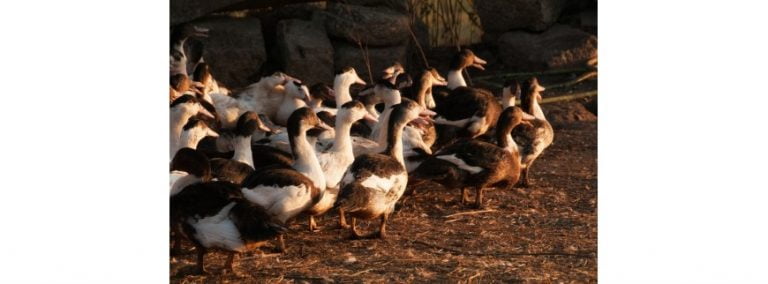
Our farmed ducks are mulards, also known as canard gras, the most common type found on French farms. Our geese and ducks are free-range, grain-fed. They are then fattened on white corn using the traditional Gers method. For almost two weeks, they receive a progressive, controlled diet, so that their livers can produce the fats needed for top-quality Foie Gras.
Products regularly rewarded at the Concours Général Agricole, our whole goose foie gras was awarded the silver medal in 2015 and the gold medal went to our whole duck foie gras in 2013.
Foie gras from the Gers in all its variations
The uninitiated may be surprised to discover that there isn't just one foie gras, but many foies gras. It's not just a question of choosing between goose and duck, but between jars, terrines and vacuum-packed foies gras. As it would be unreasonable to buy everything at once, we'd like to shed some light on the different types of foie gras packaging.
Fresh, raw foie gras
Fresh, raw foie gras is readily available from the Gers markets, the famous Marchés au Gras, or directly from producers, for self-processing. You can use it in your own recipes for pan-fried foie gras, terrines or homemade preserves. We invite you to come and choose your foie gras directly from Esprit Fois Gras at the En Sabaillan farm. We welcome you from 9:00 am to 6:00 pm.
As this is a delicate product, the question immediately arises of how to preserve it. Purists give themselves 5 hours after slaughter to prepare it so as not to lose any of its fine organoleptic qualities. However, it is possible to beat the clock by freezing the meat on site at -40°. All you have to do is pick it up.
Vacuum-packed, fresh foies gras keep perfectly well for 7 days in the refrigerator (0° to 4°) before processing, giving them time to breathe. We also offer our vacuum-packed foie gras crû du Gers, delivered within 24 hours by Chronopost relais.
Ready-to-eat foie gras
Foie gras is mainly distributed ready-to-eat under a variety of easy-to-understand names, so you can be sure you're buying the right product for the right purpose.
Whole Foie Gras (liver from the same animal), Foie Gras (pieces of lobes that may come from different animals) and Bloc de Foie Gras are regulated designations, the only ones allowed to bear the term "Foie Gras" in the sales description, and composed exclusively of foie gras and a seasoning.
In keeping with our commitment to simplicity, the only ingredients used in our products are duck or goose foie gras, salt and pepper. For the fresh foie gras block, we rework it with sugar and water to ensure that it has a uniform appearance when cut, and a more homogenous flavor.
Speaking of foie gras flavors, they change depending on whether it's canned, cooked or semi-cooked.
Canned whole foie gras
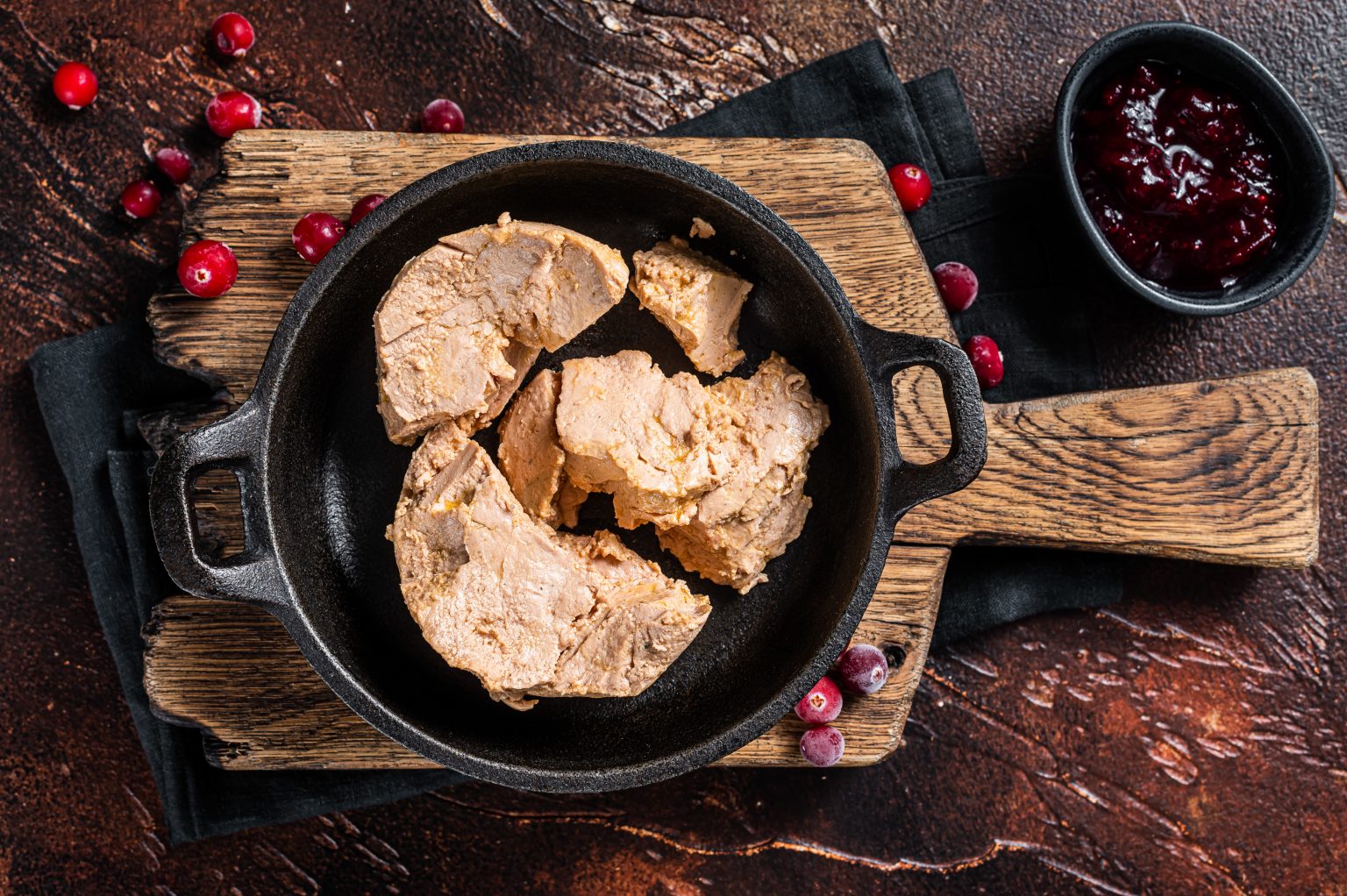
Foie gras is commonly offered in cans, so it can be kept for several years. Our preserved whole duck and goose foies gras du Gers areavailable in various weights. This cooking method makes their texture even smoother and their flavor even more refined. Lobes seasoned with salt and pepper absorb their own fat over time, making them even more creamy. Slices are evenly colored, and the secret of successful slicing lies in the use of a hot blade.
In terms of taste, duck foie gras has a more assertive palette of flavors than the more delicate goose foie gras, which is also rosier in appearance.
Cooked and semi-cooked foie gras
Cooked foie gras is presented in a terrine or vacuum-packed. It can be kept for up to a year. Semi-cooked foie gras (i.e. pasteurized but not sterilized) can only be kept for a few months, and must be refrigerated. When cut, it has a marbled appearance, much appreciated on festive tables.
Our semi-cooked duck foie gras from the Gers is pasteurized at less than 100° and cooked through. It can be stored in the refrigerator between 0°c and 4°c, and for remote orders, it is sent in special packaging. With its creamy texture, it retains all the subtle aromas of fresh foie gras.
Block of foie gras
By definition, this is a preparation of reconstituted foie gras. The lobes are not whole. On the other hand, when canners or restaurateurs add pieces of foie gras lobes to their block, it's called "bloc de foie gras avec morceaux". What a program!
Our foie gras du Gers en bloc is prepared exclusively with fresh foie gras pieces and can be stored in the refrigerator. When sliced, it is perfectly smooth and homogeneous, making it a great ally for festive aperitifs and contemporary cuisine. Its softer flavors allow for a wide range of pairings.
Although foie gras is a local, artisanal product, it is not a rustic product. Foie gras is a refined delicacy to be savored and shared. It's customary to serve only 35 to 50 grams per person... a little more would make you sink into the sin of gluttony, but we admit it's a charming flaw.
While it's customary to accompany foies gras with sweet, fruity Sauternes, Monbazillac or Pinot Gris wines, we also suggest discovering our wines from the Gers and Gascony regions: Pacherenc, Tariquet or Uby.
Then your meal begins, under the aegis of exquisiteness and authenticity.